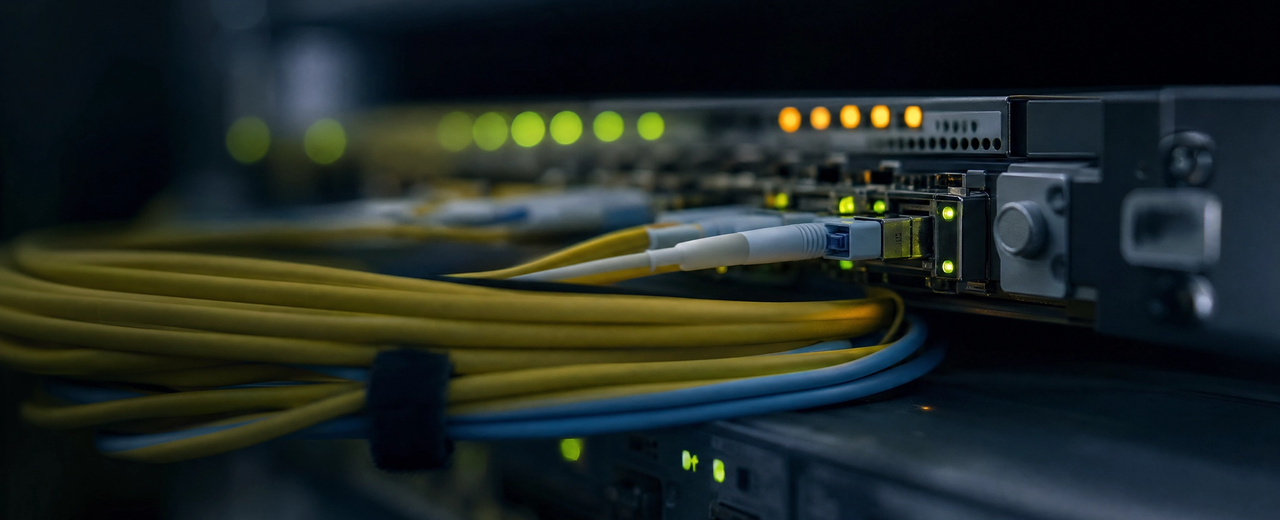
Internet Exchange Points (IXPs) are one of the most powerful - and underutilized - tools available to regional ISPs and network operators for reducing costs and improving performance. By connecting to an IXP, networks can exchange traffic directly with hundreds of other networks - including major content providers - without routing that traffic through paid transit providers.
What is an Internet Exchange Point?
An IXP is a physical infrastructure through which internet service providers exchange internet traffic between their networks. At the core of every IXP is a switching fabric - essentially a very large, high-speed switch - to which member networks connect their routers. Once connected, any IXP member can establish a BGP peering session with any other member, enabling the direct exchange of traffic.
IXPs range in size from massive global exchanges like DE-CIX Frankfurt (which handles multiple terabits of traffic per second) to smaller regional exchanges that serve local markets.
Why connect to an IXP?
1. Cost Reduction: The primary driver for most networks is cost. Traffic exchanged at an IXP doesn't travel over paid transit links, which means lower transit bills. For networks where a significant portion of traffic is destined for IXP members, the savings can be substantial.
2. Performance Improvement: Traffic exchanged at an IXP travels a shorter path - directly between networks rather than through one or more transit providers' networks. This reduces latency and can improve the reliability of traffic delivery.
3. Resilience: Peering at an IXP provides an additional traffic path that can serve as a backup if transit connectivity is disrupted. This redundancy improves overall network resilience.
4. Access to Content: Major content providers including Netflix (Open Connect), Google (GGC), Akamai, Cloudflare, and many others participate in IXPs or have cache servers co-located at exchange facilities. Connecting to an IXP can provide direct access to these content sources.
How to connect to an IXP
Connecting to an IXP typically requires:
1. Membership: Joining the IXP as a member, which involves completing an application, agreeing to the IXP's policies, and paying membership fees.
2. Colocation: Housing your router at the same facility as the IXP switching fabric, or obtaining access through a remote peering service.
3. Physical Connection: Connecting your router to the IXP fabric via a cross-connect or port.
4. BGP Configuration: Configuring BGP sessions with other IXP members you want to peer with.
For smaller networks that don't have equipment at IXP locations, remote peering services provide a way to access IXP peering without physical presence at the exchange facility. Capcon Networks' Connect-IX product provides exactly this capability - enabling rural ISPs and regional networks to access internet exchange peering without the complexity and cost of colocation.